


Alibaba’s Apsara made me think less about faster coding and more about who checks the work when the agent keeps going.
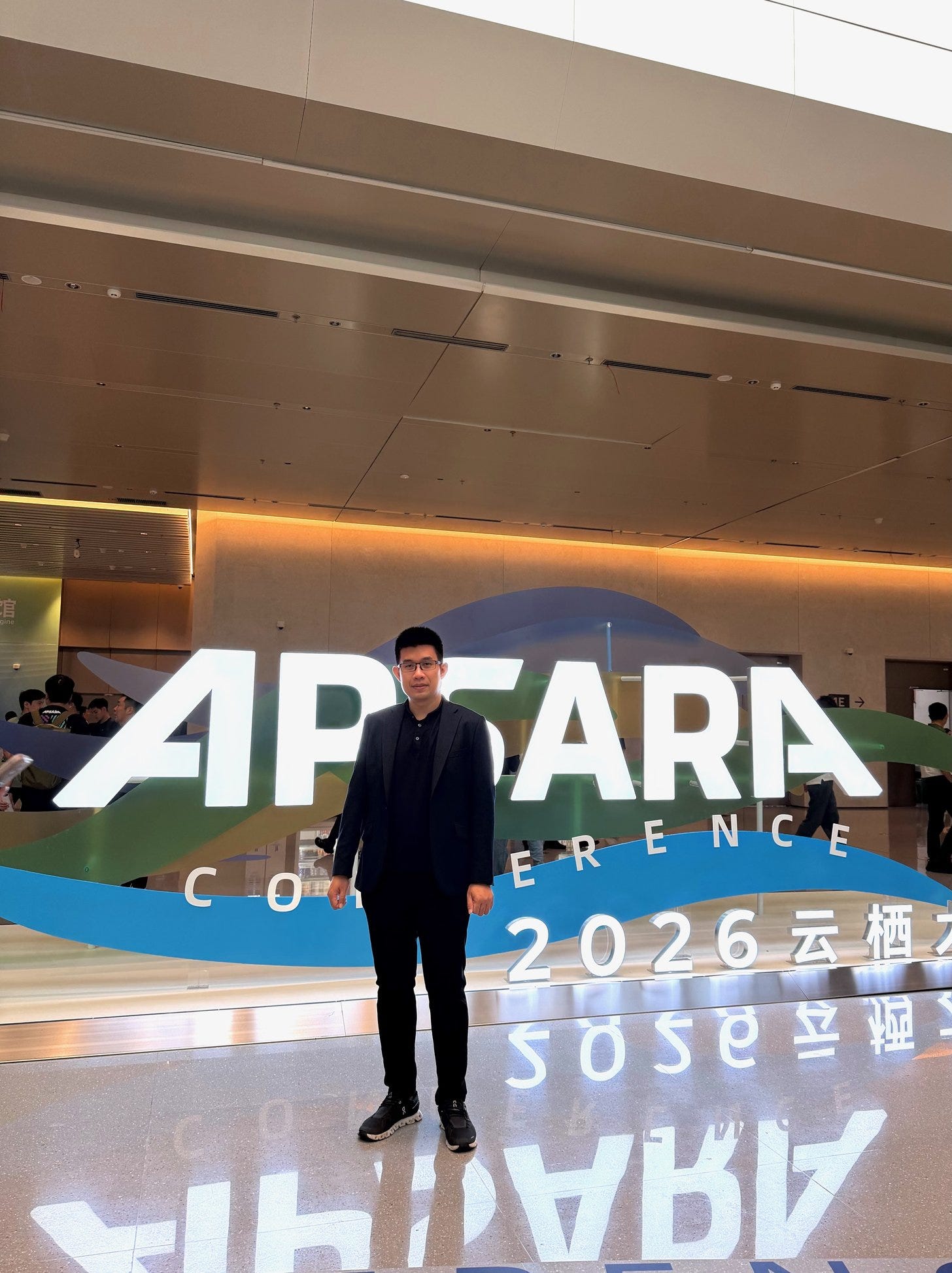
I spent three days in Hangzhou at Apsara, listening to Alibaba talk about everything from chips to agents to a computer that I now wish I could buy. Eddie Wu called AI coding the first light bulb. That landed with me because I build products with AI every day. The light is useful. I use it. But a lit room is not a working company.
I came home with an uncomfortable question for the work I do at Wize: if Alibaba can sell more of the plumbing ready to use, what exactly should a customer still pay me for?
I sat down with the people shipping my tool
Qoder is one of my main tools. I sat with its team at the conference and learned that they aim to ship an update every day. Poor guys. I also understood why it keeps changing under my hands.
Vibe Coding lets me take an idea, make the product, fix bugs and keep going without waiting for someone else to start the code. That is a real change in my working day. But I can still build the wrong thing faster. A company does not run itself because I can put a screen in front of a customer.
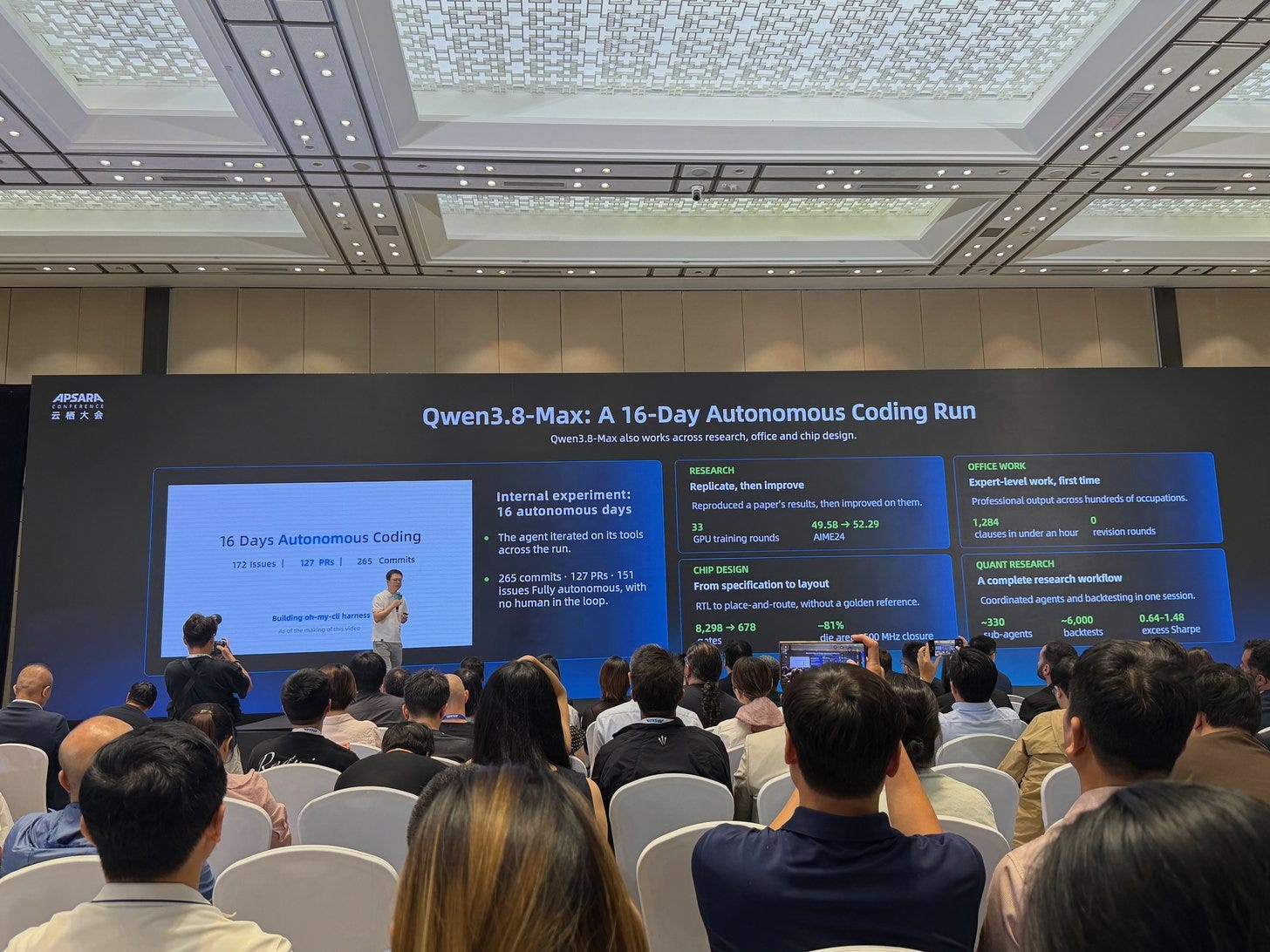
Alibaba’s QwenWork demonstration pushed the next part: Vibe Working. An agent opens files, uses tools, handles a sequence of tasks and hands work along. The useful question is not whether it can produce a nice document. It is whether it knows which version of a document is valid, whose approval is required, what it may change and when it has to stop. Leave those rules in someone’s private prompt and the rest of the team cannot inspect or reuse them. Put them into shared skills and workflows, and there might be a business process there.
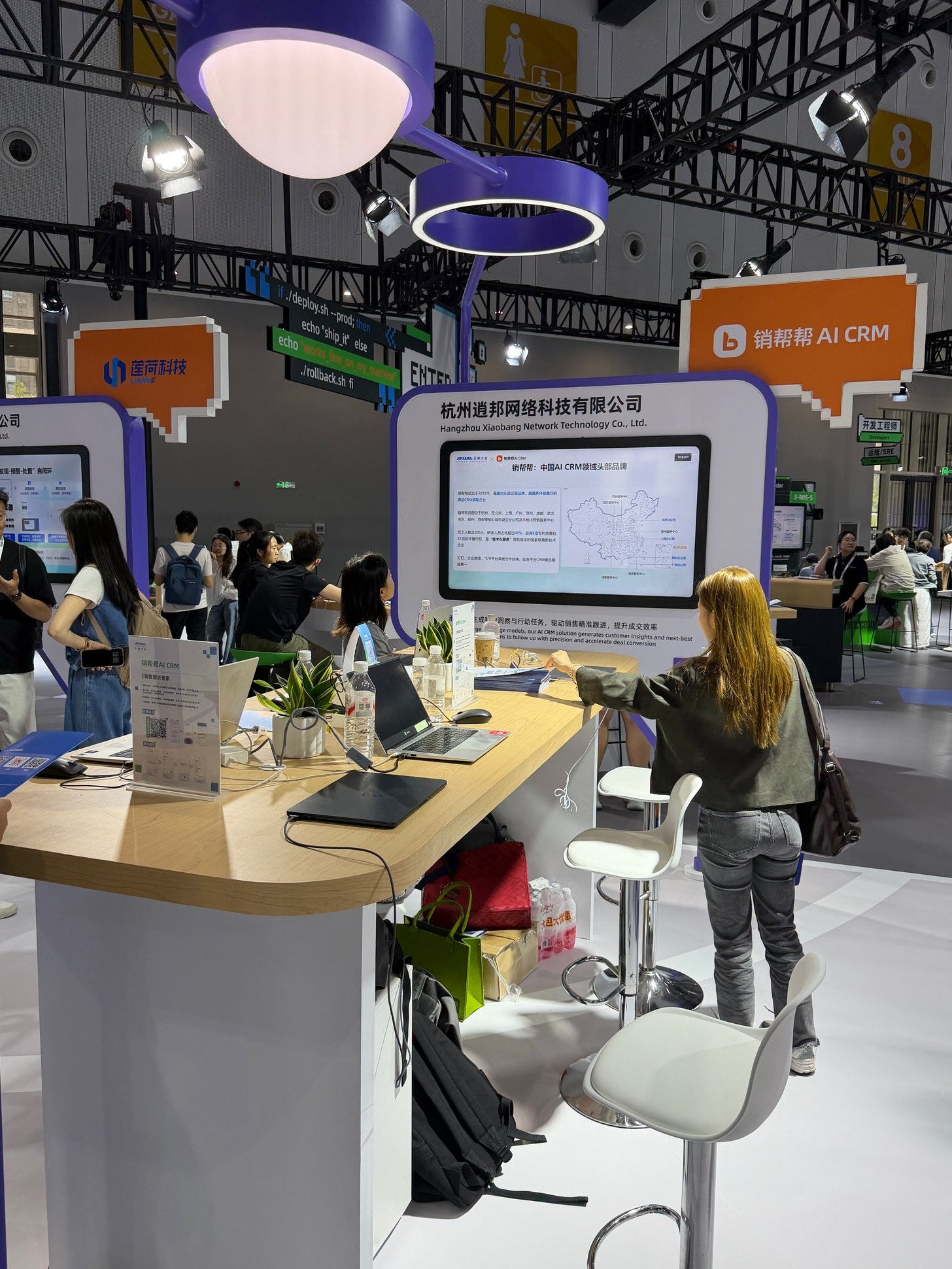
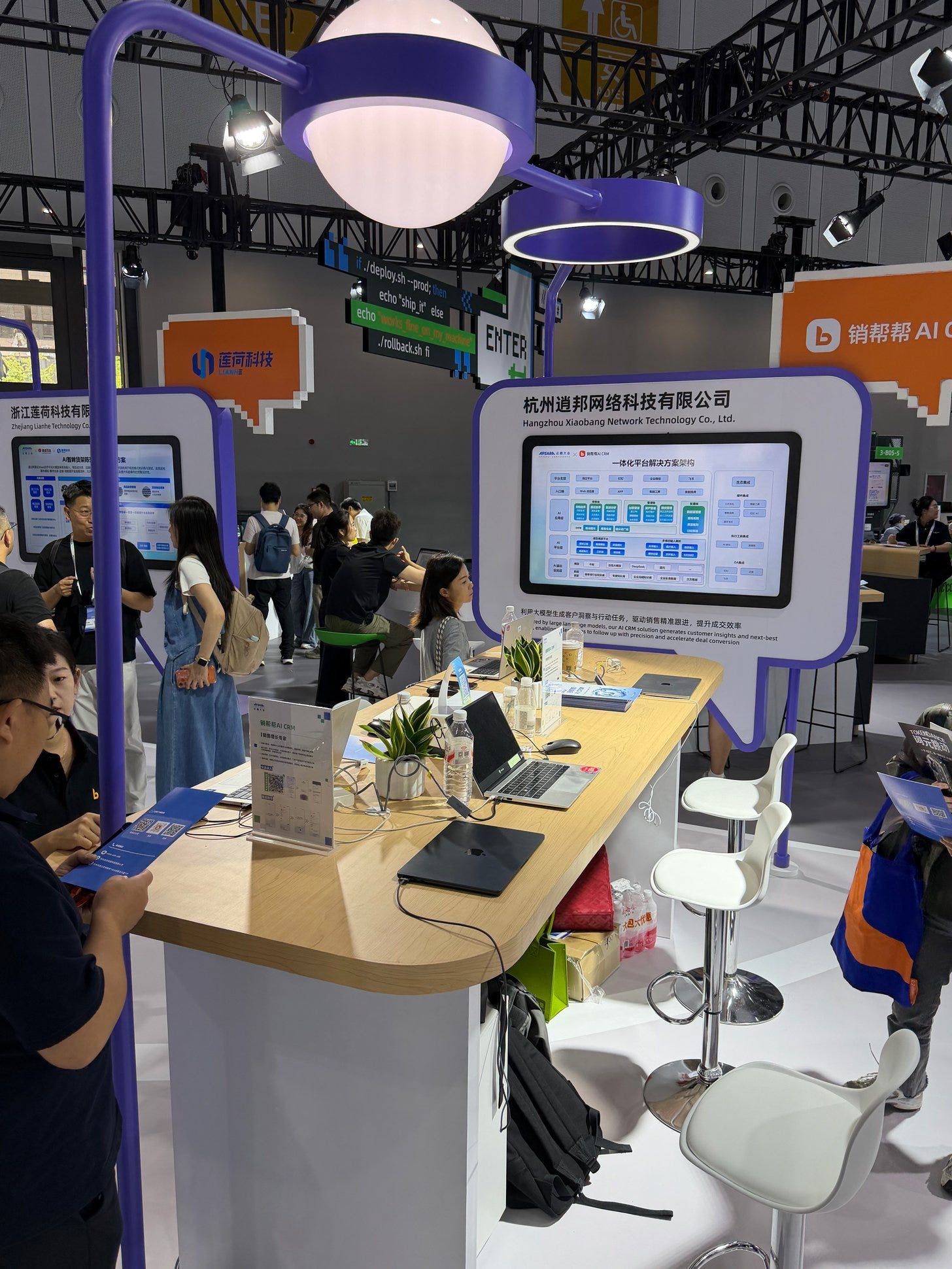
I am in the One Person Company group myself, so I care about the third part, Vibe Business. Vibe Coding makes the thing. Vibe Working makes the work run. Vibe Business turns it into a business before I have every department staffed. That does not mean I outsource responsibility to an agent. If the customer gets a bad result, they will not argue with my workflow diagram. They will call me.
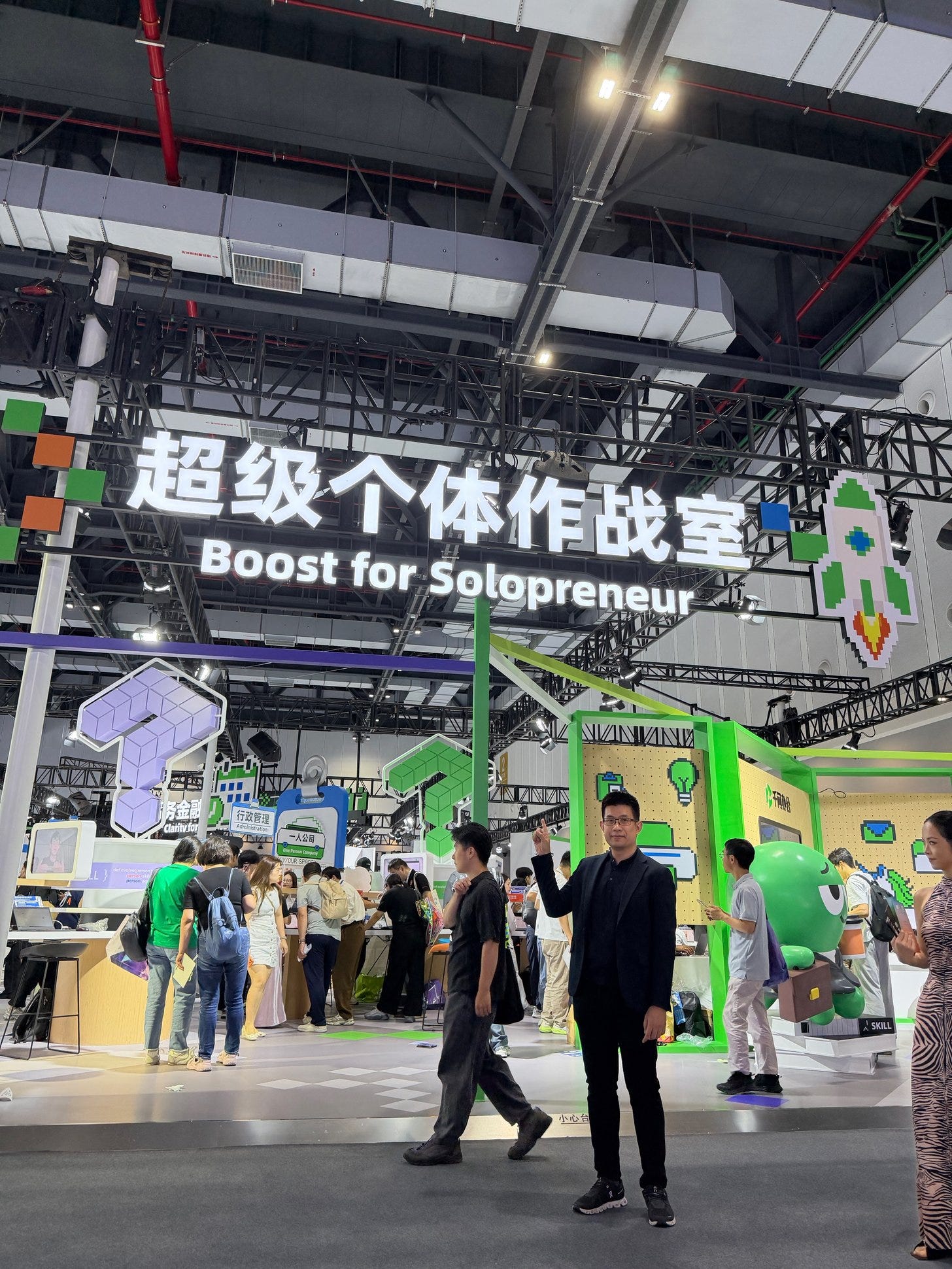
A product I built is becoming a shelf item
Smart Studio and Smart Fusion hit my own business directly. I built a multi model platform with routing, credits and cost control. Alibaba showed a way to package and bill model services under your own brand, and to route work across models through one interface. Much of what I had to build is becoming something you can buy off the shelf. Laughing through tears here 😂
Alibaba said on stage that Smart Fusion could reduce token costs by 40 to 90%, depending on the task. That is their claim, not a discount I would paste into a customer proposal without testing it on the customer’s work. The unpleasant part for me is simpler than the percentage: if I sell model aggregation with a different logo, why buy it from me? These tools lower my setup cost and my competitors’ setup cost at the same time.
I can still use that plumbing. I just need to earn the extra money by making a customer’s work finish correctly, connecting to their existing systems, and reducing the pile of fixes a person has to chase. Distribution matters too. Nobody pays extra because I memorized the model menu.
On a film set, the queue moved to judgment
I am doing AI video now, so I went looking for the awkward questions behind the demos. Can a character keep the same clothes across shots? If I revise a scene, what else changes? How many generations do I throw away before a client accepts the shot?
At the ARK session, the team did not pretend that generating frames settles those questions. Script, storyboard and production can overlap with AI. The bottleneck of an AI film set is judgment: which shot to approve, which to cut and which to generate again. The team described finishing the image generation system and then spending much longer getting the film to hold together. They talked openly about that too clean uncanny look and characters or sets drifting between shots.
That felt more useful to me than a claim about maximum video length. A long video nobody can sign off on is a long revision job. I want an agent to flag continuity changes across the story and send only the suspect shots to a human. I would rather review an actual mismatch than watch the whole thing again because a jacket moved.
The price tag I actually want
Alibaba sells more than model calls. An agent that browses, reads files, runs programs and keeps working uses compute, storage, databases and network capacity too. A cheap token does not make a cheap job if the agent fails and starts over. An expensive model might be cheaper if it gets an acceptable result with fewer retries.
My metric is cost per verified task, not token price. I want to know whether the task actually finished, how often a person had to repair it, how long it took and what the accepted result cost. That applies to the video shot as much as the customer document. It also forces me to say what verification means before I start celebrating automation.
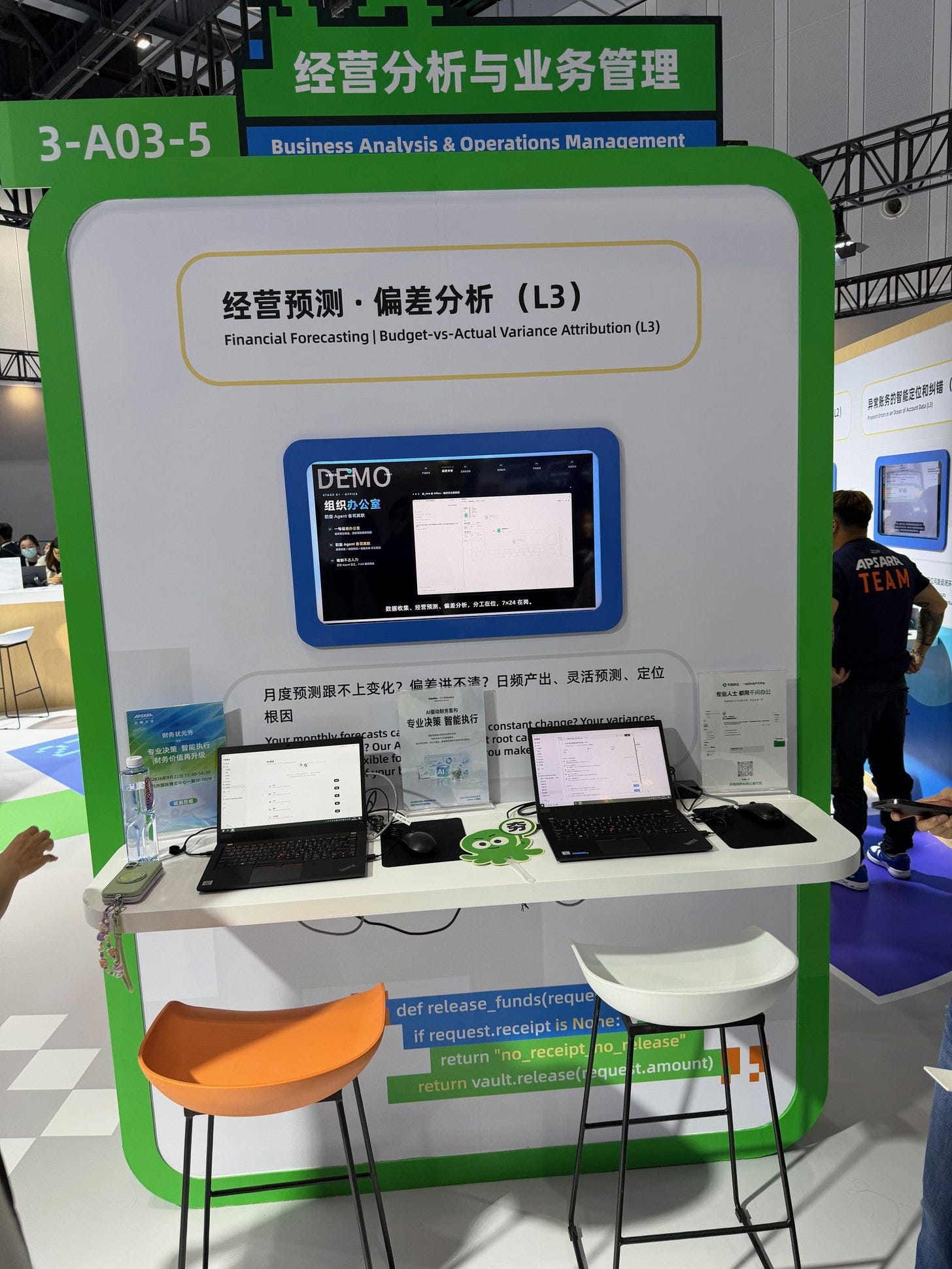
Alibaba showed research where agents run experiments and check their own results. The tempting thought is that work I previously ruled out as too expensive might become worth doing. But there is a difference between a research demonstration, a product I can use today and a roadmap. I do not want to combine percentages from different demos and call it a business case.
The computer I could not buy
I tried the Qwen Book prototype myself. Its OS looks like macOS, it felt smooth, and I would have bought one to play with if it had been on sale. It was not. Sad. What interested me beyond the interface was the idea of the OS holding the context and controls the agent needs to act without pretending that every instruction belongs in a chat box.
China’s strength at Apsara was not simply another model score. I saw Alibaba trying to fit chips, cloud, models, agents and products into work that already exists. That matters to me more than a benchmark table. I also saw how quickly my own platform’s plumbing can become a standard product.
I sleep less this year. AI vampire, apparently 🥹 There is too much to try, especially with video. Still, less sleep is not a business model. I have to choose jobs people will pay to finish, write down the decision rules, and stay responsible when the result breaks. That is the work after the light bulb.